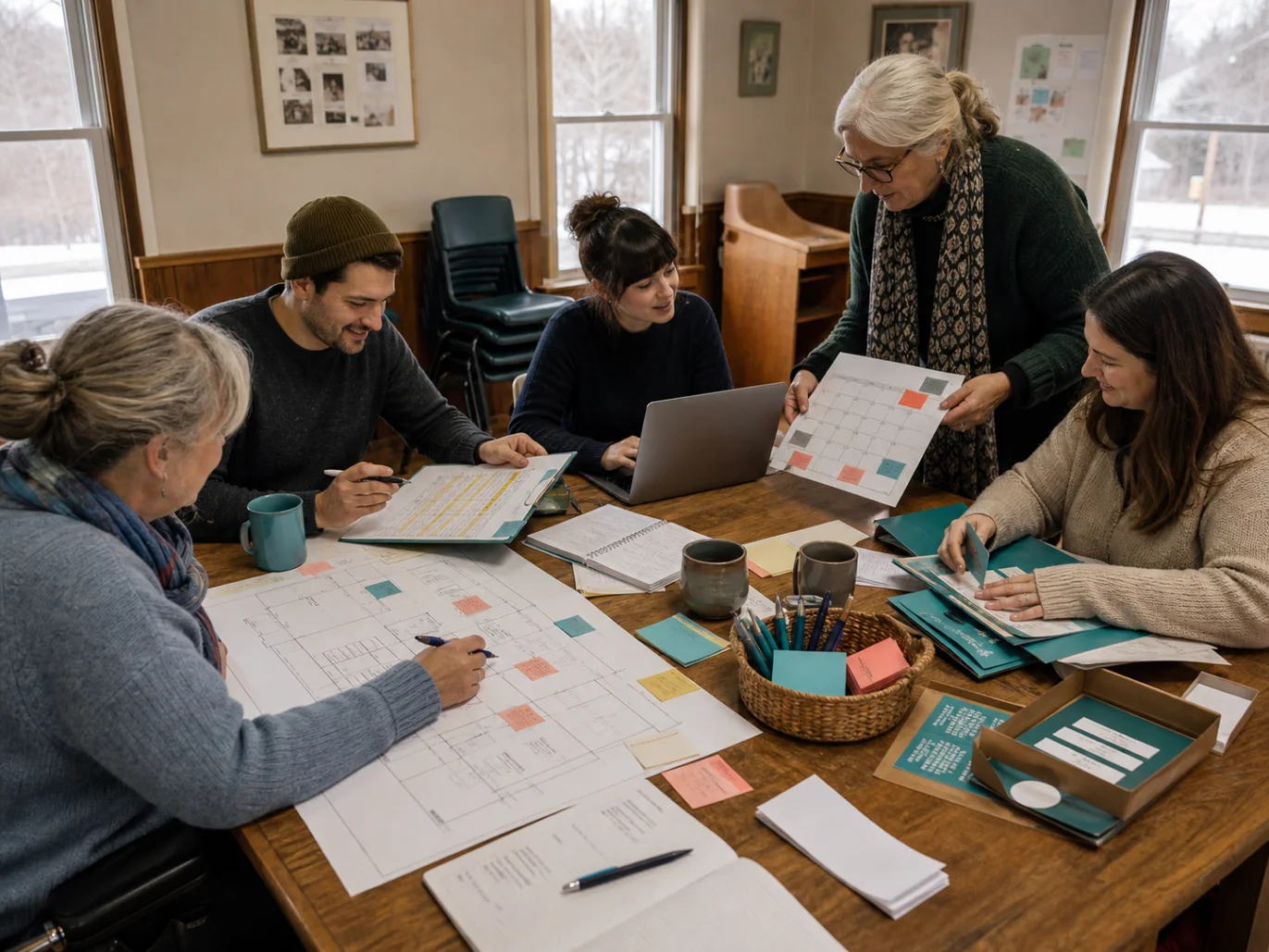
Community organizations often begin with a small group of people doing whatever needs to be done. Someone makes the flyer. Someone books the room. Someone texts the volunteers. Someone follows up with the speaker, picks up the snacks, updates the spreadsheet, and sends the reminder.
At first, this works. In the early days, task-by-task delegation feels practical because the needs are immediate and everyone is learning by doing. But as an organization grows, delegating individual tasks can quietly become a bottleneck. People wait to be told what to do. Leaders become dispatchers. Volunteers complete assignments without understanding the broader purpose. The organization may look busy, but its capacity does not really expand.
A more durable approach is to delegate functions, not just tasks.
The Difference Between a Task and a Function
A task is a single action: send the reminder email, bring the chairs, make the sign-in sheet, post the announcement.
A function is an area of responsibility: own participant communications, make events welcoming and well-run, coordinate volunteers, keep members connected, manage the public calendar.
Tasks are finite. Functions create ownership. When a person or team owns a function, they are trusted to understand the goal, make judgment calls, improve the process, and notice what needs doing before someone else assigns it.
This distinction matters especially in community organizing, where relationships, trust, and continuity are the real infrastructure.
Task Delegation Keeps Power at the Center
When we delegate only tasks, we unintentionally keep knowledge and authority concentrated at the center. The same few people hold the strategy, context, and decision-making power, while everyone else receives fragments of work.
That can make participation feel transactional. It also makes the organization fragile. If one core person burns out, steps away, or simply misses something, the whole operation slows down.
Delegating functions distributes not only labor, but leadership.
What Function-Level Delegation Looks Like
Instead of asking different volunteers to bring chairs, make a sign-in sheet, and send follow-up texts, an organization might create an events function responsible for making gatherings welcoming, accessible, and well-run. That team can decide what materials are needed, build a checklist, learn from each event, and train new people into the work.
Instead of asking someone to post a single announcement, give them ownership of digital communications. They can manage the calendar, shape the tone, track what gets engagement, and make sure the organization's public voice is consistent.
Instead of assigning one person to call five members, invite them to help own member care or volunteer coordination. That function includes outreach, onboarding, retention, appreciation, and noticing when people are drifting away.
This does not mean abandoning tasks. Functions still contain tasks. But the task is placed inside a larger purpose. The person doing the work can see why it matters and how to make it better.
Functions Develop People
Community organizations are not only vehicles for action. They are places where people learn how to lead.
If we only hand people isolated tasks, we limit their growth. If we give them meaningful responsibility with support, they build judgment, confidence, and commitment.
That support matters. Function-level delegation requires more care up front. Leaders need to clarify outcomes, share context, define boundaries, and make space for questions. They need to resist the urge to micromanage every decision. They also need to provide support without taking the work back at the first sign of imperfection.
A Better Delegation Conversation
Before handing off a function, ask the questions that turn assignment into shared leadership:
- What is this function responsible for?
- What decisions can this person or team make on their own?
- What values or standards should guide the work?
- When should they check in with others?
- What resources, tools, or relationships do they need?
- How will we know whether this function is working well?
These questions do something simple and powerful: they give people enough shape to act without waiting for permission on every move.
The Payoff
Organizations that delegate functions become more resilient. More people understand how the work fits together. Leaders have more room to think strategically. Volunteers feel trusted instead of merely useful. Knowledge spreads. New leaders emerge. The organization becomes less dependent on heroic effort and more capable of sustained action.
For community organizations, this is not just an internal management preference. It reflects the values many groups are trying to practice in the world: shared power, mutual responsibility, participation, and trust.
If the goal is only to get through this week's checklist, task delegation may be enough. But if the goal is to build an organization that can grow, adapt, and endure, we need to delegate differently.
We need to stop asking only, "Who can do this task?"
We should also ask, "Who can own this function, learn it deeply, and bring others into it?"
That shift is how community organizations move from activity to capacity. It is how they turn volunteers into leaders. And it is how they build the kind of shared power they are often working to create.