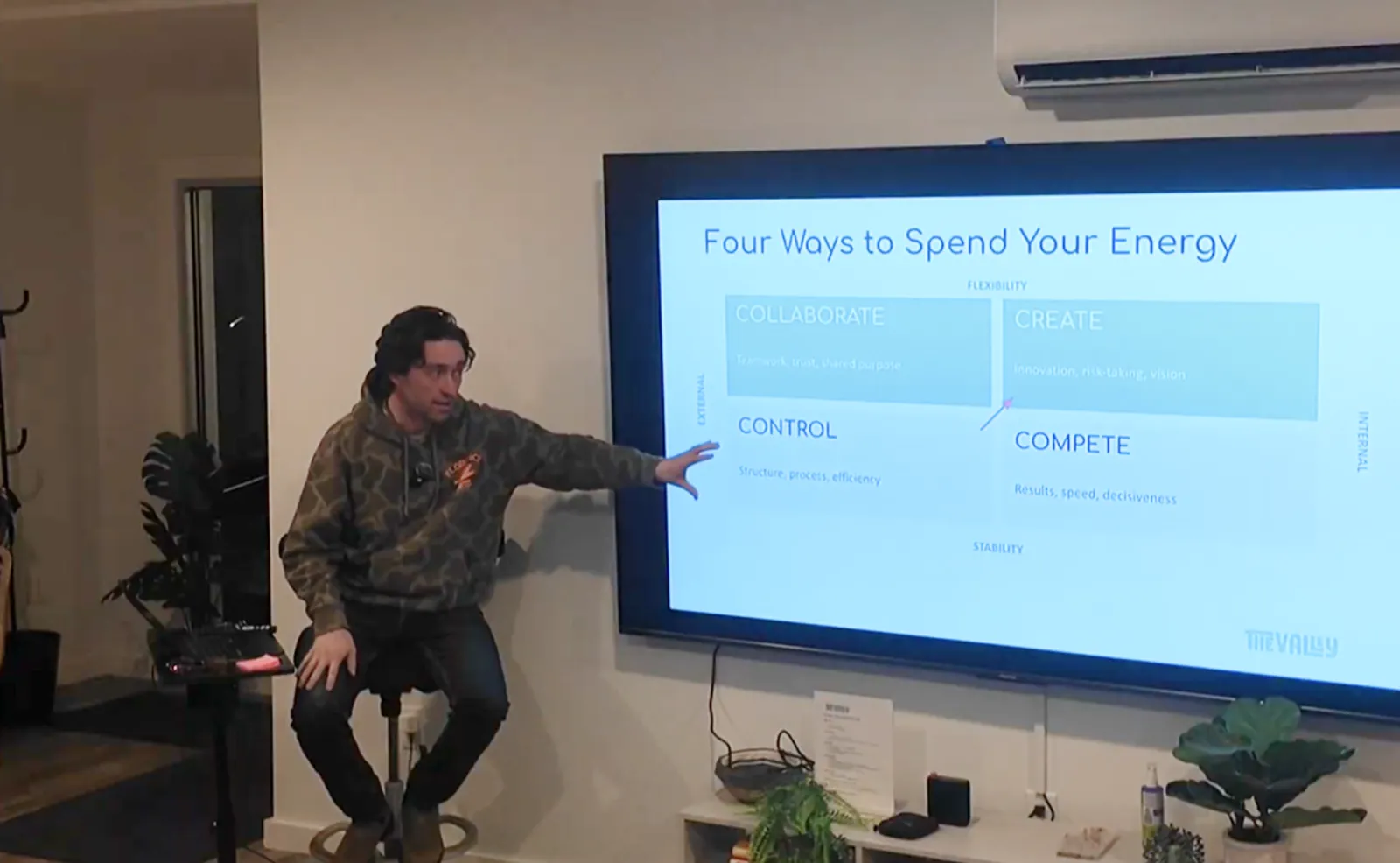
Last night Andrew Flynn gave a talk on collaboration. The attendance consisted of local business owners and leaders from around the county.
If you’re a video person, we put together the highlights:
The Problem
Andrew started out by mentioning that there is no shortage of doers in Washington County. However, the region’s biggest challenges, such as workforce, housing, enrollment, and healthcare costs, cannot be solved by individuals working alone.
One Cow, One Town
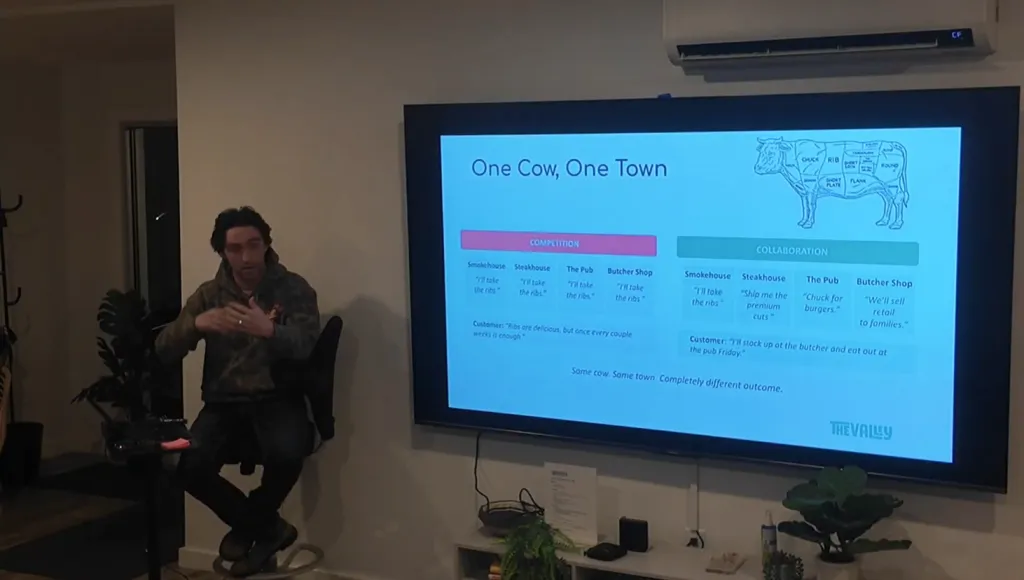
This concept was used to compare competition and collaboration. In the competition scenario, four businesses (smokehouse, steakhouse, pub, butcher shop) all want the ribs, leading to limited sales. The collaboration scenario shows businesses communicating to specialize in different cuts (ribs for smokehouse, premium cuts for steakhouse, chuck for the pub, retail for butcher shop), resulting in a customer buying ribs, stocking up at the butcher, and possibly going to the pub, ultimately engaging with more functions. Which is key to economic development in a small town with limited resources.
“Collaboration does not equal consensus”
Getting everyone on board and motivated for a single idea is a very hard (if not impossible) task. When using a collaborative approach, you have to be ok with others disagreeing. Andrew pointed out that it’s better to move things forward without a full consensus than not move at all.
Different Ways to Spend Energy:
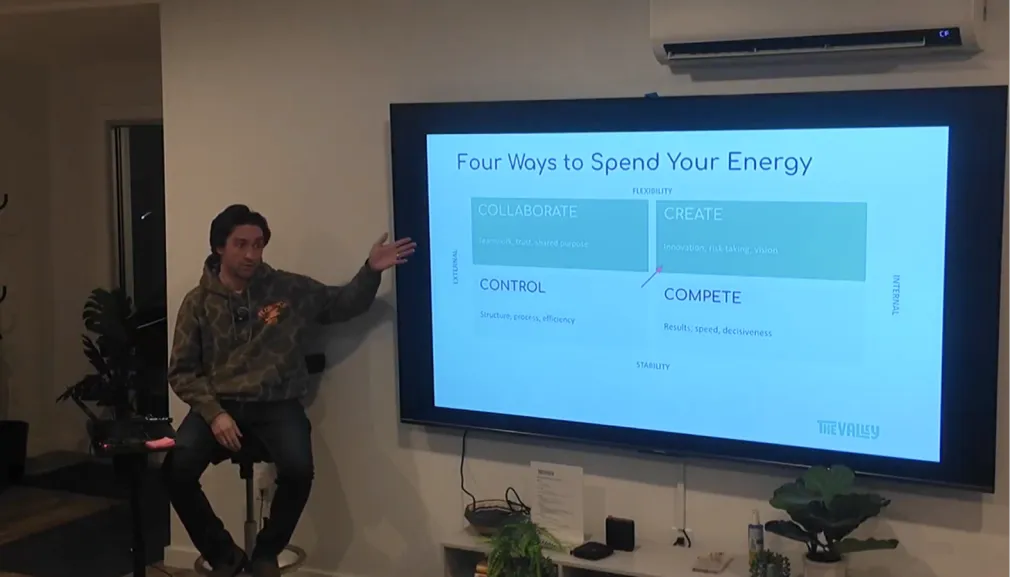
Referencing the chart on the image above, Andrew explains that living on the bottom (compete and control) prevents people from reaching the create phase, because innovative people hate being controlled. However, controls are needed for a functioning society. Andrew suggests that moving toward the collaborative zone and away from control will lead to more growth and prosperity within our county.
“Collaboration without a vision is just people being polite”
A clear vision is needed for direction, which can be shared through invitations rather than instructions.
The Key Takeaway:
If Washington County wants to tackle workforce shortages, housing challenges, and rising costs, it won’t happen through isolated effort. It will happen through intentional collaboration, with vision, disagreement, and forward movement.