A few weeks ago, I learned that a local 10-year-old named Teddy wanted to make a video game.
After spending the morning at camp at Hubbard Hall, Teddy joined us at The Valley for an afternoon of game development. We didn’t have a fixed lesson plan. We had something better: three and a half hours and a shared goal that he would leave with something tangible.
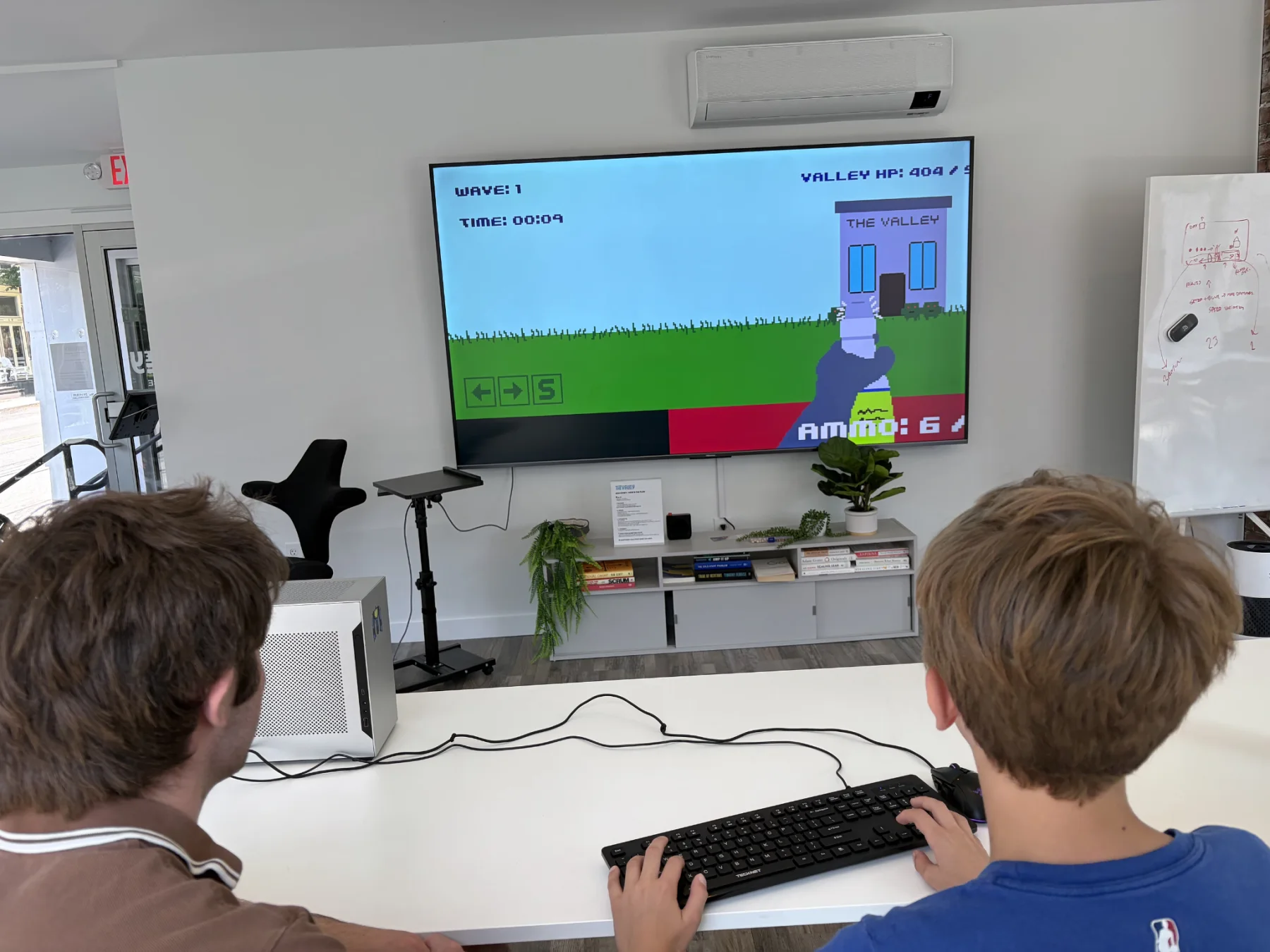
The first lesson was about scope.
It’s easy to begin a game project with a long list of exciting ideas. The hard part is deciding what can actually be built with the time and resources available. A typical game jam gives developers a full day or even an entire weekend. We had one afternoon.
Next came programming—the magic that makes everything move.
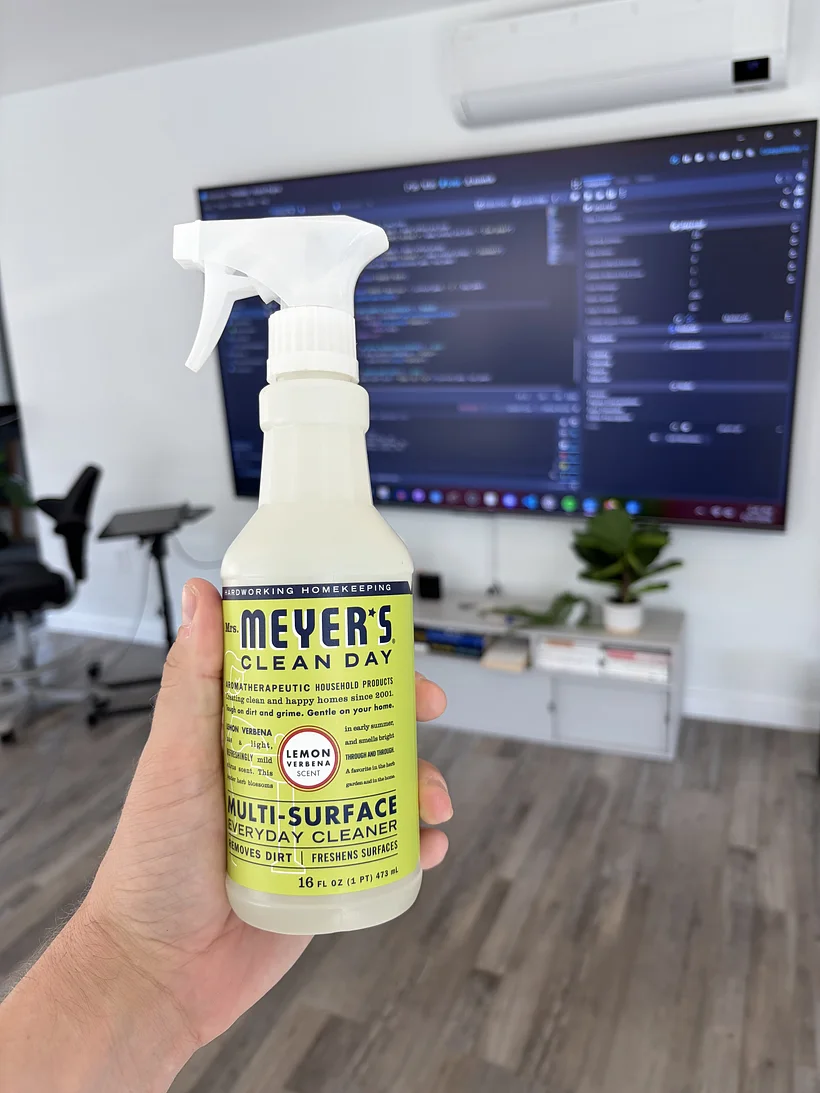
We used Godot, our game engine of choice. To explain how Godot organizes a project into “scenes,” I picked up a bottle of Mrs. Meyer’s cleaner. Its label color, bottle size, and spray strength could all be thought of as variables: values defined in a script and used by functions. A game works in much the same way, combining different scenes and rules until they interact as a complete system.
Then it was time to design the game.
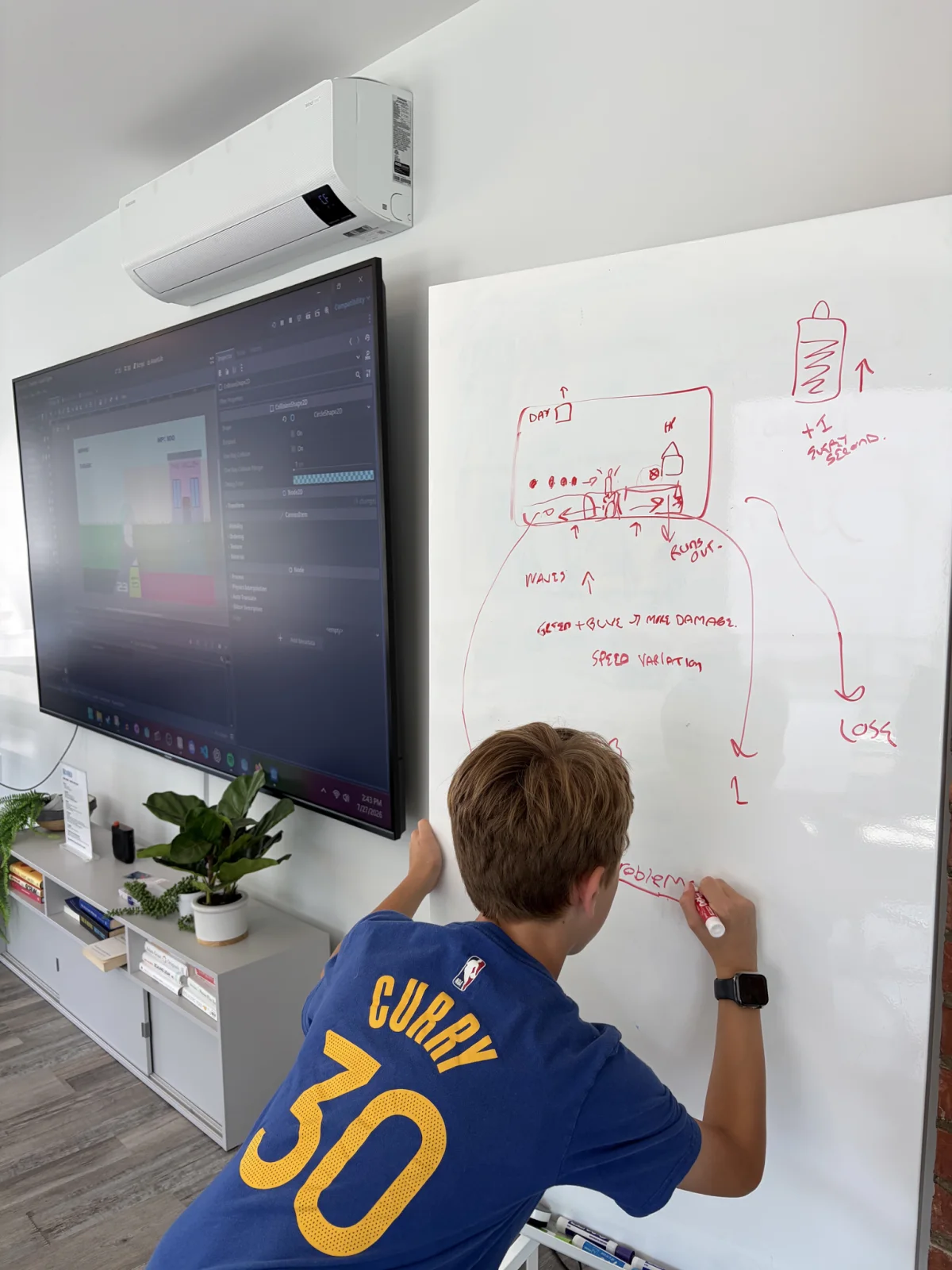
Teddy imagined zombies attacking a building representing The Valley. Naturally, we needed a way to stop them. His weapon of choice was the same spray bottle we had just used to explain programming.
I guided the process, but Teddy drove the ideas. To keep players from simply standing beside The Valley for the entire game, Teddy designed an ammunition system. Players would need to move between different zones to replenish their cleaner, creating both risk and reward.
And so, Clean Defense was born.
We opened Aseprite and started producing the game’s pixel art. Teddy served as art director while I handled the drawing, allowing us to move quickly through one of the most time-consuming parts of game development. One of my favorite choices was Teddy’s idea to animate the zombies as they marched toward The Valley. That small detail brought the action to life.
Teddy also became our quality-assurance tester, playing the game every time we added a new feature.
About halfway through development, he discovered our first major bug: the spray bottle’s crosshair wasn’t detecting the zombies. We spent about 15 minutes investigating before discovering that a node was simply in the wrong place.
The fix was small, but the lesson was important. In software development, a tiny issue can have a surprisingly large effect. Debugging means testing possibilities, eliminating potential causes, and patiently narrowing the problem down.
Teddy didn’t spend the afternoon watching from the sidelines. He worked directly in the Godot editor, repositioning labels, creating color rectangles, and adding buttons for the game-over screen he wanted.
As our time ran out, Teddy made one thing clear: we had to publish the game.
He suggested Steam… I asked, “Do you want to pay $100?” Haha. So we turned to the SoundCloud of video games: itch.io. Teddy wrote the store-page description and helped create the game’s thumbnail.
Just as we finished publishing, his mom arrived.
In three and a half hours, Teddy didn’t simply learn a few concepts about programming. He helped imagine, design, test, debug, and publish a real video game.
That’s exactly what we want The Valley to make possible: a place where curiosity becomes a project—and where an idea can become something real before it’s time to go home.
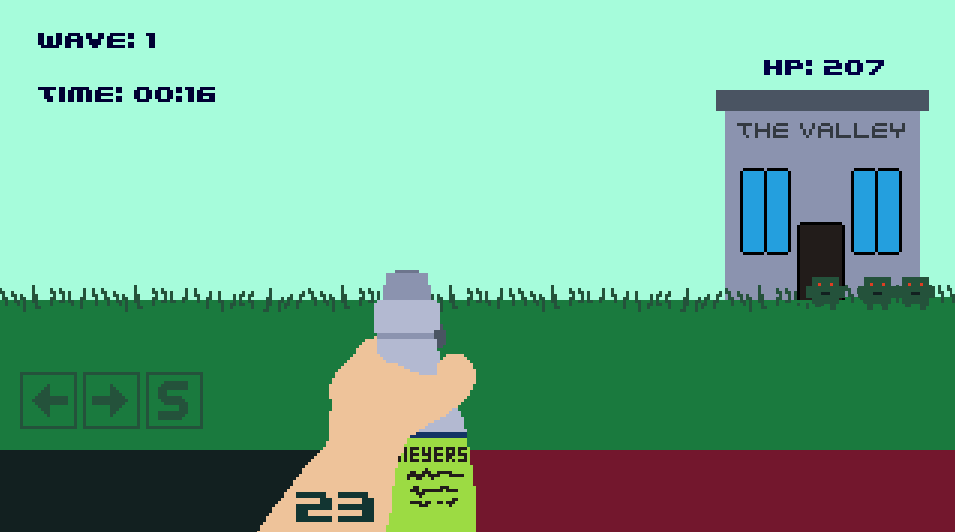
Want to play Teddy’s game?
Play Clean Defense in your browser.
Until next time,
Charlie Dill
The Valley Hub